Is Animal Crossing: New Horizons okay for kids?
Green light for ages 5 and up. Animal Crossing: New Horizons earned the holy-grail-of-safe-multiplayer reputation because the friend-code system is genuinely restrictive.
Parents also ask about Animal Crossing: New Horizons
Is Animal Crossing: New Horizons safe for online play?
Yes. Animal Crossing: New Horizons only allows multiplayer between players who have exchanged Switch friend codes. There are no public lobbies, no random matchmaking, no way for a stranger to find a kid's island. It's the safest multiplayer game in the recon list.
What age is Animal Crossing: New Horizons appropriate for?
5 and up. The gameplay is reading-light enough for early elementary kids, and there's no violence, scary content, or failure state. The friend-code multiplayer makes it the rare first-multiplayer-game candidate for younger kids.
Is there any chat with strangers in Animal Crossing: New Horizons?
No. Chat in Animal Crossing: New Horizons is limited to players on each other's friend list. There is no voice chat in the game itself; voice happens through a separate Nintendo Switch Online phone app, which most families don't install.
What to watch for in Animal Crossing: New Horizons
- Stopping and playtimeCaution
Real-time events tie play to the calendar · time pull is the actual risk surface
- Chat and messagesLow
No stranger chat by design · friend codes are the only entry
- Contact with other playersLow
Friend-code multiplayer · no public lobbies · no random matchmaking
- Spending and extra purchasesLow
One-time purchase · optional Happy Home Paradise DLC · no microtransactions
- Content your child may seeLow
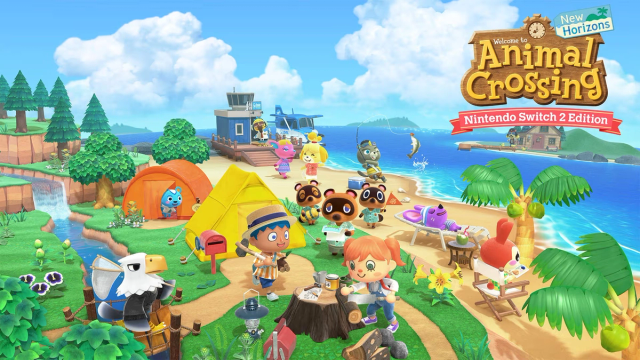
Gentle cartoon villagers · no violence · no scary themes anywhere
Before you start
The full review
Why kids want to play Animal Crossing: New Horizons
Animal Crossing: New Horizons is the cozy game that became a cultural phenomenon during the 2020 lockdowns and has settled into a steady tier of kids' multiplayer ever since. The pull is partly the gentle gameplay (no failure, no rush, no scoreboards) and partly the daily-rhythm structure: new things happen on the island every day, and a kid who logs in for fifteen minutes sees something that wasn't there yesterday.
For kids who already played New Horizons during its peak, the pull is creative: customizing the island, building outdoor spaces, decorating houses. For kids new to Animal Crossing: New Horizons in 2026, it's still the easiest yes for a first multiplayer game on Switch.
Why this verdict
- Animal Crossing: New Horizons multiplayer is gated entirely by friend codes. No random matchmaking, no public lobbies, no stranger contact by design.
- No chat with strangers at any point. In-game messaging is between friends only and uses pre-set quick responses or typed text via the Switch keyboard.
- One-time purchase from Nintendo. No microtransactions in the game; the optional Happy Home Paradise DLC is sold once.
- The daily-rhythm design (events tied to real-world time) is the actual addictive surface, not the social side.
- Cosmetic and exploration-focused gameplay; no violence, no scary content, no failure states that frustrate younger players.
Who it fits
Best for
- Younger kids who want a first online game without the stranger risk
- Cozy-game families who want a daily rhythm they can share
- Households on Switch already paying for Switch Online
Less suited to
- Kids looking for action or competition; nothing in Animal Crossing: New Horizons rewards reflexes
- Households that can't tolerate the real-time clock pull (one to two play sessions a day)
Detailed risk notes
- Real-time daily events that pressure a kid to log in
- Friend-code sharing on Discord servers or school playgrounds beyond your inner circle
- Time-traveling the Switch clock to skip ahead (a culture some kids fall into)
- Happy Home Paradise DLC pressure once the base game is exhausted
- Real-time daily play pressure
Chat and messages
Animal Crossing: New Horizons has no chat with strangers, ever. In-game text chat is limited to players on each other's friend list and uses the Switch on-screen keyboard or preset quick responses. There's no voice chat in the game itself; voice happens through the separate Nintendo Switch Online phone app, which most families don't bother installing.
Contact with other players
Animal Crossing: New Horizons connects kids only to other players whose Switch friend codes they have explicitly exchanged. There are no public lobbies, no random matchmaking, and no way for a stranger to find or contact a kid's island. The risk surface here is bounded entirely by who the parent and kid have decided to share friend codes with.
Spending and extra purchases
Animal Crossing: New Horizons is a one-time purchase. Online play requires a Nintendo Switch Online subscription, which most families already have. The only post-launch purchase is the Happy Home Paradise DLC, sold once, which opens up additional content. There are no microtransactions, no battle pass, no premium currency. Spend pressure is essentially zero.
Stopping and playtime
Animal Crossing: New Horizons's daily-rhythm design is the actual engagement loop. Real-world time controls when shops open, when characters visit, and when seasonal events trigger. A kid who plays daily will feel the structure as a friendly routine; a kid who's prone to time-anxiety may feel pressured to log in. Worth setting Switch parental control time caps if the daily pull is too strong, and discussing whether time-traveling the Switch clock is acceptable.
Content your child may see
Animal Crossing: New Horizons has no violence, no scary content, and no themes a young kid would find upsetting. The gameplay is gathering, customization, and friendship-building with cartoon animal villagers. The visual style is bright and the audio is unfailingly gentle. Content-wise, this is the safest game on the recon list.