Is Splatoon 3 okay for kids?
Green light for ages 8 and up. Splatoon 3 is the unusual case where the design choices have done the safety work for you, and where the only setting that really matters lives outside the game.
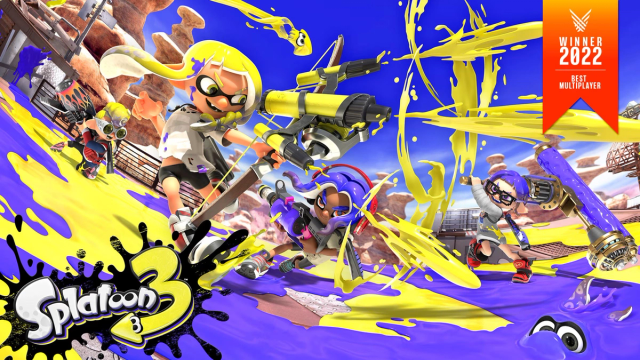
Parents also ask about Splatoon 3
Does Splatoon 3 have voice chat?
No. Splatoon 3 has no in-game voice chat. Players communicate with two preset phrases. The only voice or text option in the wider Splatoon 3 ecosystem is the SplatNet companion app, which is a separate phone install you can simply not set up.
Is Splatoon 3 violent?
Not in the realistic sense. Splatoon 3 is a paint-territory shooter where squid-kids fire ink and respawn. No blood, no humans-shooting-humans, no upsetting imagery. ESRB rates it E10+.
What's the minimum age for Splatoon 3?
8 and up. Splatoon 3's matches require quick decision-making and map reading. A focused 7-year-old can manage. The competitive modes (Anarchy Battle, ranked Salmon Run) get harder for younger players to enjoy.
What to watch for in Splatoon 3
- Contact with other playersLow
Random matches with no voice or friend-add · Salmon Run is the closest stranger surface
- Spending and extra purchasesLow
One-time purchase plus Switch Online sub · in-game cash gear shop · no battle pass
- Stopping and playtimeLow
Three-minute matches · daily gear shop FOMO · no battle pass · use Switch time caps
- Chat and messagesLow
No voice chat · two preset phrases only · SplatNet phone app is the only text surface
- Content your child may seeLow
Ink not blood · cartoon squid-kids · no realistic violence or upsetting themes
Before you start
The full review
Why kids want to play Splatoon 3
Splatoon 3 is the shooter that kids whose families said no to Fortnite are usually allowed to play, and the social effect of that is a genre with its own dedicated community. The pull is partly the visual style (squid-kids, ink, neon outfits, a lot of it looks like a Nickelodeon show) and partly the rhythm. A match is three to five minutes, and the win condition (cover more of the map in your team's ink) is something a kid can read in the first thirty seconds.
For older kids who already played Splatoon 1 or 2, Splatoon 3 is the version with the most modes, the deepest weapon roster, and the live-service Splatfest events that drop seasonally. For kids new to the series, it's the version that's currently active, which means they'll find friends to play with.
Why this verdict
- No in-game voice chat. Players communicate with two preset phrases (This way! and Booyah!) only.
- The shooter framing is misleading. Splatoon 3 is ink-on-ground territory control, no blood, no humans shooting humans.
- Online play is gated behind Nintendo Switch Online, which adds a parent payment step before any multiplayer happens.
- The optional SplatNet companion app is the only text-chat surface, and it lives outside the game on a phone you can simply not install.
- Cosmetic shop pressure exists but is light by current shooter standards. No battle-pass mechanics that punish stopping.
Who it fits
Best for
- Kids who want a shooter their classmates play, without the Fortnite or Roblox social load
- Younger players who can read maps but aren't ready for voice-chat lobbies
- Households on Switch already paying for Switch Online
Less suited to
- Kids who specifically want voice-chat play with friends in-game
- Players already deep in competitive PvP shooters; the depth ceiling is lower
Detailed risk notes
- SplatNet companion app on a phone enables text chat outside the game
- Salmon Run mode pairs kids with random strangers (no voice, but coordination matters)
- Gear shop runs on a daily rotation that rewards checking in
- Anarchy Battle ranked mode is where competitive frustration usually shows up
- Cartoon weapon use (ink guns)
- Mild competitive frustration in ranked modes
Chat and messages
Splatoon 3 has no in-game voice chat. Communication between players in any mode is limited to two preset phrases, 'This way!' and 'Booyah!', which can't be combined into a real message. The only chat surface in the broader Splatoon 3 ecosystem is the SplatNet companion app, a separate phone install that does include text chat with friends. Don't install SplatNet on the phone the kid uses, and the chat surface is effectively gone.
Contact with other players
Splatoon 3 pairs kids with random other players in every online mode, but the structure of the matchmaking limits what those strangers can do. There's no voice. There's no friend-add flow during a match. The closest thing to stranger contact is Salmon Run, the co-op horde mode, where coordination matters and a confused teammate can frustrate the lobby. Even there, the worst case is a bad match, not contact that follows the kid out of the game.
Spending and extra purchases
Splatoon 3's monetization is light by current shooter standards. The game is a one-time purchase. Online play requires a Nintendo Switch Online subscription, which most families already have. There's no battle pass and no premium currency in the conventional sense; the gear shop runs on in-game cash earned from playing. Splatoon 3's Catalog (the seasonal cosmetic track) is included with the base game, not a paid pass. Spend pressure is real but bounded; the bigger ask is the Switch Online subscription itself.
Stopping and playtime
Splatoon 3's daily-rotation gear shop and seasonal Splatfest events create a 'log in to not miss out' pull that's milder than a battle-pass game but isn't nothing. A kid who checks the shop daily will notice the rotation more than a kid who plays in bursts. The match length is short (three to five minutes), which means a 'just one more match' loop is real. Worth setting Switch parental control time caps even if the kid handles them well, because Splatoon 3 itself doesn't enforce a stopping point.
Content your child may see
Splatoon 3 is a paint-shooter without realistic violence. The visual language is squid-kids in neon outfits firing ink at each other, getting splatted, and respawning. There's no blood, no human-targeting violence, and no upsetting themes in the campaign or multiplayer modes. The ranked-mode communication between rounds (the two preset phrases) cannot be combined into language a parent would object to.