- Older kids (12+) who can play it as one game among several
- Kids learning strategic thinking, since the game has real depth
- Households comfortable having the spending conversation upfront
MPC · ReconFile 71 / 2026Living document
Filed May 13, 2026Re-audited May 14, 2026
Recon · strategy-card
Recon: Clash Royale
Rated E10+, App Store 9+, but the economic shape of the game in 2026 feels closer to 12+. The question isn't whether the game is appropriate, but whether the kid is ready to play a game with this monetization model.
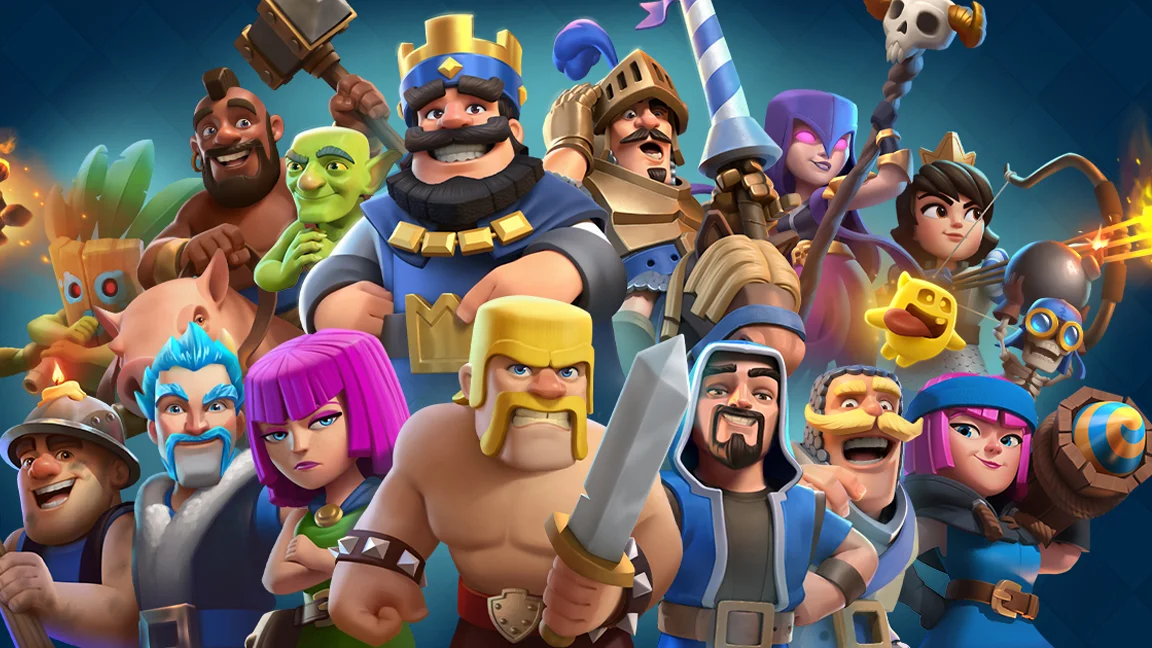 Field photo · Clash Royale characters
Verdict
Cautious yes
Cautious yes for roughly 12+ who can hold the idea that the game wants their money. For younger kids, not yet. Less because the game is unsafe and more because the spending conversation is harder to have at nine than at twelve.Age fit
ESRB E10+, App Store 9+, but in practice closer to 12+ because of the economic design, not the content.
Floor 12+Platforms
ios · android
Publisher
Supercell
Play style
online
Popularity
mainstream
01 · The 60-second answer
Cautious yes for roughly 12+. Not yet for younger.
Clash Royale is a good game with a steepening pay-to-win curve. A kid who can hold the frame that the game wants their money will be fine. A nine-year-old usually can't yet. A twelve-year-old often can.
Parent bottom line
Clash Royale is fine. The pressure to spend is real, and it increases with skill level. The kid who can name that pressure can play it; the kid who can't will internalize losing as failure.
Why we landed here · 05 reasons
The core game (short matches, strategic depth) is genuinely good and well-designed
Risk surface is narrow. No voice chat, no broadcast chat to strangers, no off-platform escalation pattern documented.
Family-friendly clan auto-restriction for under-16 accounts works as advertised when birth date is correct
The pay-to-win pressure since 2023 (Evolutions, Magic Items, season pass) is the main concern, and it's invisible to younger kids until they hit the skill ceiling
Supercell is visibly responding to monetization feedback. Direction of travel is toward less aggressive monetization, but the current state still reflects two years of growing pressure.
Who it works for, who it doesn't, what to watch.
02 · The shape of the fit- Card evolutions and Magic Items, the main spend-to-win levers in 2026
- Season pass rewards have crept up the power curve in recent updates
- Clan chat behavior on non-family-friendly clans
- App Store and Play Store purchases need to be locked behind your password
- Younger kids (under 10) who'll interpret losing as personal failure
- Households unwilling to lock device-level purchases
- Kids who already show a 'just one more battle' pattern with other games
03 · AWhy kids are playing it.
Clash Royale runs on short matches with real strategic depth. A kid can win or lose in three minutes and walk away having learned something about timing or card synergy. The clan structure adds a social layer that feels lighter than Discord or Roblox: a small group of up to fifty players you can chat with and trade cards with, often kids from the same school or friend group. For a kid who already plays competitive games, the appeal is the skill ceiling. For a kid who doesn't, the appeal is usually 'my friends are in a clan.'
03 · BWhat parents should know.
Clash Royale is a good game. That is worth saying clearly, because the rest of this Recon gets into the parts that have gotten harder, and it's easy to read past the part where the underlying game still has the compulsive-in-a-good-way design it had at launch: short matches, real strategic depth, a low floor and a high ceiling, no death animations or scary content for younger kids. A ten-year-old can play this for an hour, lose three matches, win two, learn something, put it down. That is a defensible thing for a kid to be doing.
What has changed since the early days is the economy. Clash Royale used to be a relatively pure expression of 'you get cards, you upgrade cards, you battle.' There was always some pay-to-win pressure, but it was bounded. Over the last two years, Supercell has layered in card evolutions (specific cards that get a second, more powerful version unlocked through a separate currency), magic items, which can short-circuit weeks of progression, and a season pass system where the rewards have crept further up the power curve. The cumulative effect is that the gap between a free-to-play player and a moderate spender is wider than it used to be, and the gap between a moderate spender and a heavy spender keeps widening.
This is not unique to Clash Royale. The same shape shows up in most live-service mobile games, and Supercell's design is in some ways less aggressive than its competitors. But it is worth naming because the parent decision here is downstream of the economic shape, not the gameplay shape. A kid who is old enough to understand 'this game wants me to spend money to keep winning, and I can choose not to' is a kid who can play Clash Royale fine. A kid who is not yet able to hold that frame is going to interpret losing as their own failure, and the pressure to fix it with a five-dollar purchase is going to feel reasonable to them in the moment. That is the gap between the 9+ rating and what actually plays like a 12+ game.
There is also a regulatory backdrop worth knowing about. Several countries have been tightening rules around loot boxes and spending mechanics in games targeted at kids, and Supercell has been visibly adjusting in response: better odds disclosure, safeguards on duplicate-card rewards, more transparent pity systems. The direction of travel is toward less aggressive monetization. The version of the game a kid downloads today still reflects two years of growing pay-to-win pressure that the recent reforms have only partly walked back, but the trajectory matters when deciding whether to come back and look again in six months.
03 · CGameplay observations.
A Clash Royale match is three minutes by design, and the matchmaker tries to find an opponent at roughly your skill level. Win conditions are simple: knock down more towers than the other player before time runs out, or knock down their king tower for an instant win. The depth of Clash Royale comes from the deck-building and the timing of card plays, not from anything visually overwhelming. Kids tend to play in clusters of three or four matches, take a break, come back.
The clan side of Clash Royale is asynchronous. Friends in your clan can request cards, donate cards back, chat in the shared channel. None of this requires real-time presence. A kid who logs in for ten minutes once a day can stay current with their Clash Royale clan without any of the always-on pressure other multiplayer games create.
04 · Risk dashboard
The same five lenses we use on every recon.
Each risk area gets a deep band below. The colour strip and tag tell you where this game lands on each one before you read.
- Low riskNot a real concern for this title
- Pay attentionHeads up — worth knowing about
- Caution advisedReal risk — set rails before handing it over
- Not recommendedDealbreaker — skip this title
Risk · 01Chat & communicationManageable
Clash Royale's only chat surface is clan chat.
Read · Risk · 02Strangers & contactLowClash Royale has effectively no stranger contact.
Read · Risk · 03Monetization & spendThe big oneClash Royale's monetization is the area to actually watch, and most of the shift since 2023 has been in the direction…
Read · Risk · 04Addictive mechanicsThree-min hitClash Royale's short match design plus daily quests plus the season pass creates a 'just one more' loop that's…
Read · Risk · 05Content exposureLowClash Royale's content exposure is low.
Read ·01. Risk · 01 of 05
Chat & communication.
Voice + textClan chat only · family-friendly clans default for under-16
Clash Royale's only chat surface is clan chat. Clans are groups of up to fifty players who can chat in a shared channel, trade cards, and play together. For accounts flagged as under sixteen (which requires the correct birth date on the Supercell ID), Supercell auto-restricts clan membership to family-friendly clans, a smaller, moderated subset. This is the right default and it works as advertised most of the time. Clash Royale has no voice chat and no broadcast chat to strangers.
02. Risk · 02 of 05
Strangers & contact.
Cross-play · friend requestsNo random matchmaking chat · no off-platform escalation pattern
Clash Royale has effectively no stranger contact. There's no random matchmaking with chat, no voice, and no documented off-platform escalation pattern. The closest thing to a stranger risk in Clash Royale is the toxic-clan-chat problem, which is real but bounded by the family-friendly clan default for under-sixteen accounts. The other thing worth flagging is account theft (kids being tricked in clan chat into giving up credentials), but that's a password hygiene conversation, not a Clash Royale safety one.
03. Risk · 03 of 05
Monetization & spend.
Skins · battle pass · bundlesPay-to-win pressure has grown since 2023 · device-level lock is the defense
Clash Royale's monetization is the area to actually watch, and most of the shift since 2023 has been in the direction of things you can buy that materially affect whether you win. Evolved cards, the Magic Items system, the season pass with progression-locked rewards. None of these are gambling exactly, but they create an experience where a free-to-play kid who hits a certain skill ceiling will look around and notice that the players who keep beating them are spending. Supercell has acknowledged the feedback and is working on rebalancing, but Clash Royale still leans heavily on spending for late-game competitive play.
04. Risk · 04 of 05
Addictive mechanics.
Battle pass · daily questsJust-one-more loop · short matches are the unit of compulsion
Clash Royale's short match design plus daily quests plus the season pass creates a 'just one more' loop that's effective on adults too, and is worth naming for younger kids in particular. Matches are three minutes long, which sounds short until you realize that's the unit of the compulsion. Not a thirty-minute level, a three-minute hit. Worth setting screen time limits at the device level even if the kid handles them well, just to make the stopping point external rather than internal.
05. Risk · 05 of 05
Content exposure.
Cartoon violence · player behaviorCartoon combat · no blood · nothing to manage
Clash Royale's content exposure is low. Cartoon combat, no blood, no drugs, no sexual content, no scary themes. The visual style is friendly and the violence is abstracted. This is one of the few risk areas in the Clash Royale recon where the answer is just: not a concern.