- Kids who want to build, design, or play with siblings and friends from school
- Younger players (7+) in single-player or on family Realms
- Co-play between parents and kids, since there's no skill ceiling locking adults out
- Households on console or mobile, where Bedrock makes setup straightforward
MPC · ReconFile 17 / 2026Living document
Filed May 13, 2026Re-audited May 14, 2026
Recon · creative-sandbox
Recon: Minecraft
The closest a modern, online-enabled game gets to default-safe. The risk surface is almost entirely in multiplayer, which is the part most under a parent's control.
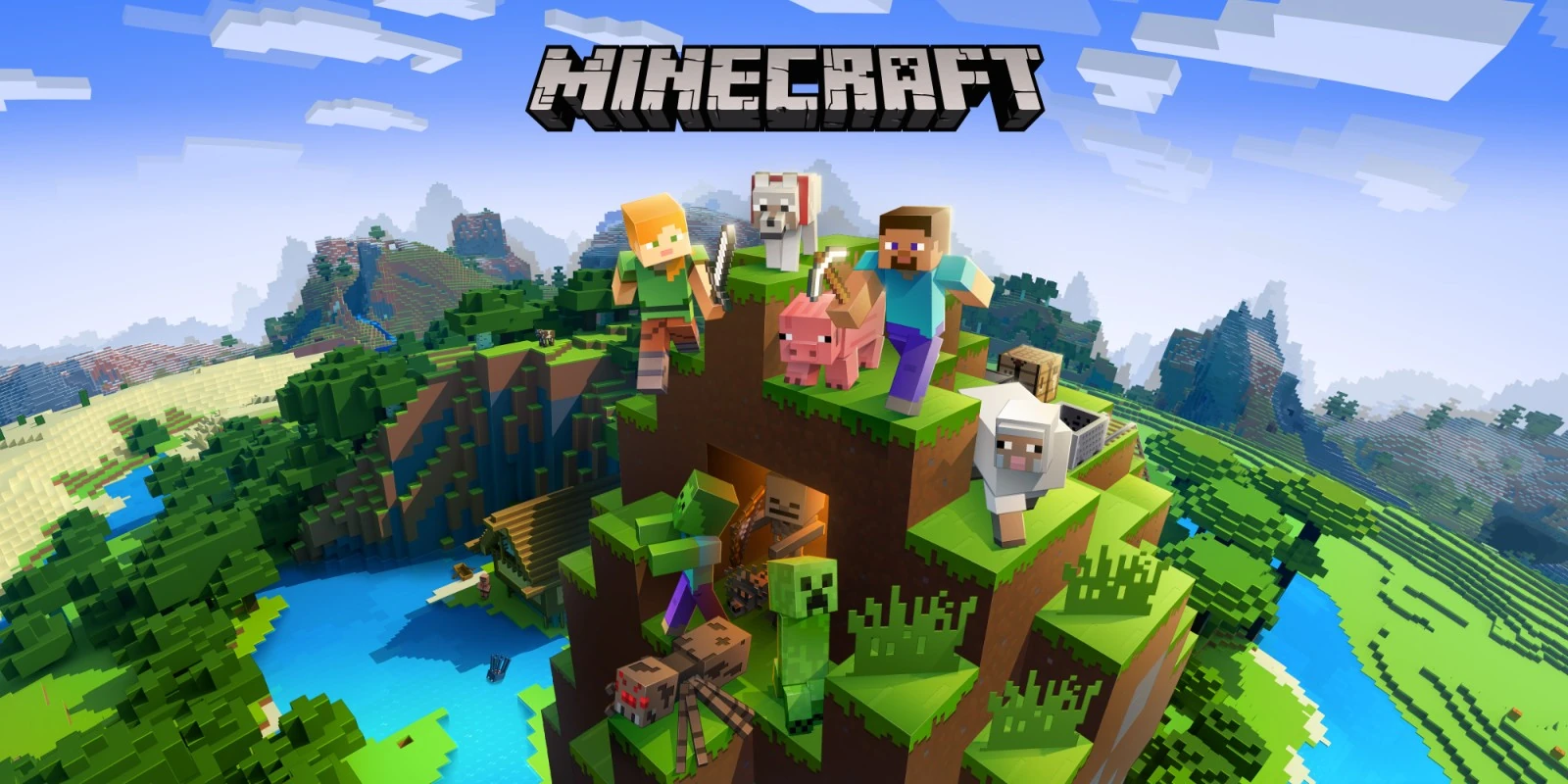 Field photo · Minecraft Cover Art
Verdict
Green light
Green light for single-player and family Realms. Public servers are the variable, so vet them before saying yes.Age fit
7+ in single-player with sensible defaults, younger with parent co-play. Multiplayer is setup-dependent.
Floor 7+Platforms
pc-mac · ios · android · xbox · playstation · nintendo-switch
Publisher
Mojang Studios / Microsoft
Play style
hybrid
Popularity
mega-hit
01 · The 60-second answer
Green light, with notes on edition and multiplayer.
Minecraft is the closest a modern online-enabled game gets to default-safe. Core experience: no chat, no social pressure, no monetization loop. Risk lives almost entirely in multiplayer, the part a parent controls.
Parent bottom line
If a kid wants to build, this is the right yes. The design is anti-pressure in a way most modern games aren't. The biggest setup decision is Bedrock versus Java, since Bedrock plugs into Microsoft Family.
Why we landed here · 05 reasons
The core experience has no chat, no social pressure, no monetization loop, which is unusual for a modern game
Bedrock integrates with Microsoft Family for native parental controls
Family Realms create a closed multiplayer experience between specific accounts you invite
The game's design (no battle pass, no daily login, no leveling treadmill) makes 'I want to stop playing' a different conversation than in most modern games
Co-play is genuinely possible, since there's no skill ceiling locking out adults
Who it works for, who it doesn't, what to watch.
02 · The shape of the fit- Public servers (variable moderation quality)
- Marketplace skin packs and Minecoins purchases
- Java Edition has fewer native parental controls than Bedrock
- Mods on Java are powerful but require more parent engagement
- Kids whose parents don't want to vet public servers before allowing them
- Households wanting a fully hands-off setup on Java Edition specifically
03 · AWhy kids are playing it.
Minecraft is the game most kids encounter early and stay with the longest. The pull is partly the building. A kid can pour months into a single world without ever feeling like the game ran out. And it's partly the social shape around it: a friend builds something cool, posts it to a YouTube channel, the rest of the class wants to try the same thing. The ecosystem of Minecraft videos and streamers is its own gravitational pull, sometimes bigger than the game itself.
03 · BWhat parents should know.
There is a reason Minecraft is the game most often used in classrooms and the one most often handed to younger siblings without much hand-wringing. The design is unusually anti-pressure: no leveling treadmill, no daily login bonuses, no battle pass, no friend-status leaderboard. A kid can put it down for six months and pick it up with nothing lost. That kind of design choice used to be unremarkable; in 2026 it is increasingly rare, and it changes the conversation a parent has with their kid about screen time. The complaint usually isn't 'the game won't let me stop.' It's 'I want to keep building this.'
The harder part of Minecraft is the part that exists outside the core experience. Public servers are not Mojang-moderated. The big ones run their own programs and have their own staff, and they generally do a reasonable job, but the responsibility for moderation has been outsourced and a parent should know it. The smaller servers can be anything from a kid's friend's home setup to something a parent would not want their child anywhere near. The visible URL is sometimes the only signal a parent has about what's behind it.
The Java versus Bedrock question is the other thing worth slowing down on. They are mechanically very similar games (same blocks, same crafting recipes, same creepers), but the platforms they live on shape the parental control story more than the games themselves do. Java is the original PC and Mac version, the one with the modding scene. Mods are a real reason to use Java; the trade-off is that Java predates Microsoft's modern family infrastructure, so a Java parent has fewer native tools and relies more on the kid only joining servers the parent has approved. Bedrock ships on consoles, mobile, and the modern Windows app, and it plugs into Microsoft Family, Xbox Live's friend and chat controls, and the device's content settings.
The other thing worth naming directly is that Minecraft is one of the only games in this Recon set where the design itself supports co-play. A parent who wants to spend half an hour in a world with their kid actually can. There is no skill ceiling that locks adults out, no competitive matchmaking that punishes a beginner, no chat dynamic where being slower is socially costly. The strongest version of knowing what your kid is playing is having played it with them, and Minecraft is a low bar to clear there.
03 · CGameplay observations.
Minecraft sessions in single-player tend to be project-shaped rather than time-shaped. A kid sits down to finish building the wall around their base or to mine for diamonds, and they stop when the project hits a natural pause. There's no save anxiety, no scoreboard tracking how long they played, no penalty for putting it down mid-build.
On a Minecraft family Realm, the dynamic shifts toward parallel play. Multiple kids in the same world doing different things, occasionally collaborating on something larger. It looks more like kids playing in a backyard than like an online multiplayer game in any conventional sense. On a public Minecraft server, the experience varies dramatically by server.
04 · Risk dashboard
The same five lenses we use on every recon.
Each risk area gets a deep band below. The colour strip and tag tell you where this game lands on each one before you read.
- Low riskNot a real concern for this title
- Pay attentionHeads up — worth knowing about
- Caution advisedReal risk — set rails before handing it over
- Not recommendedDealbreaker — skip this title
Risk · 01Chat & communicationSetup-gated
Minecraft has no chat in single-player.
Read · Risk · 02Strangers & contactSetup-gatedMinecraft's stranger exposure is gated entirely by which multiplayer setup the kid is on.
Read · Risk · 03Monetization & spendLightMinecraft's monetization pressure is low compared to almost every other game in this recon set.
Read · Risk · 04Addictive mechanicsAnti-pressureMinecraft is actively designed not to have these.
Read · Risk · 05Content exposureLowMinecraft has no content exposure to manage in single-player.
Read ·01. Risk · 01 of 05
Chat & communication.
Voice + textNo chat in single-player · friend-only on Realms · variable on public servers
Minecraft has no chat in single-player. In a private family Realm (a Mojang-hosted server you pay a small monthly subscription for and invite only specific accounts to), the chat is between people you have explicitly added, usually siblings, cousins, friends from school. On a public Minecraft server, chat is whatever that server allows, and the quality varies from heavily moderated to wild west.
02. Risk · 02 of 05
Strangers & contact.
Cross-play · friend requestsFamily Realm zero · public servers vary · which one matters more than which game
Minecraft's stranger exposure is gated entirely by which multiplayer setup the kid is on. Family Realm: zero. Public server: variable. The largest Minecraft servers (Hypixel, Mineplex, CubeCraft) are heavily moderated and reasonable. Smaller servers are an open question, worth knowing which one your kid is on the same way you'd know which YouTube channels they're watching.
03. Risk · 03 of 05
Monetization & spend.
Skins · battle pass · bundlesOne-time purchase · Marketplace exists but doesn't nag
Minecraft's monetization pressure is low compared to almost every other game in this recon set. The base game is a one-time purchase, or it's included with Game Pass. The Minecraft Marketplace exists (skin packs, world templates, mini-games) and uses Minecoins, which a kid can prompt you to buy. The pressure is real but it's not the constant nag of a free-to-play game. Set up purchase approval at the device level and the conversation becomes manageable.
04. Risk · 04 of 05
Addictive mechanics.
Battle pass · daily questsNo battle pass · no daily login · no leaderboard · designed without loops
Minecraft is actively designed not to have these. No battle pass, no daily login bonus, no progression treadmill, no friend-status leaderboard. The pull of Minecraft is the creative one, like 'I want to keep building this,' which is a different kind of compulsion than 'I'll lose my streak if I stop' and is easier for a kid to navigate.
05. Risk · 05 of 05
Content exposure.
Cartoon violence · player behaviorSingle-player has nothing to manage · public servers are the variable
Minecraft has no content exposure to manage in single-player. On public servers, content exposure depends on the server. The biggest moderated ones are reasonable; smaller ones vary. The other thing to know: some large Minecraft servers run their own marketplaces with their own currency, and some have evolved into something closer to a game-inside-the-game with its own monetization. Worth a look before saying yes to any specific server.
05 · Parent questions
What parents are asking about Minecraft.
If yours isn't here, write back. The list gets longer.
Is Minecraft safe for my 7-year-old?
Yes, in single-player or on a family Realm. Single-player has no chat, no other players, and no monetization loop. A family Realm is a Mojang-hosted server a parent invites specific accounts to, usually siblings or friends from school. Public servers are the variable to vet before saying yes.
Should we get Bedrock or Java Edition?
Bedrock if starting fresh. Bedrock plugs into Microsoft Family for native parental controls and ships on consoles, mobile, and Windows. Java is the PC and Mac version with the modding scene, but it predates Microsoft's modern family infrastructure, so a Java parent relies more on day-to-day engagement.
What's the difference between a Realm and a public server?
A Realm is a small Mojang-hosted server a parent pays a monthly fee for and invites specific accounts to. A public server is anyone running their own Minecraft server, with their own rules and moderation. The biggest public servers (Hypixel, Mineplex) are heavily moderated. Smaller ones vary widely.
Can strangers contact my kid on Minecraft?
It depends on the multiplayer setup. Single-player has no other players. Family Realms only include accounts a parent invites. Public servers are where stranger contact happens, and the quality varies from heavily moderated big servers to wild-west smaller ones. Knowing which server matters more than the game itself.
Does Minecraft pressure kids to spend money?
Much less than most modern games. The base game is a one-time purchase, or included with Game Pass. The Minecraft Marketplace exists for skin packs and mini-games and uses Minecoins. Set up purchase approval at the device level and the conversation stays manageable.